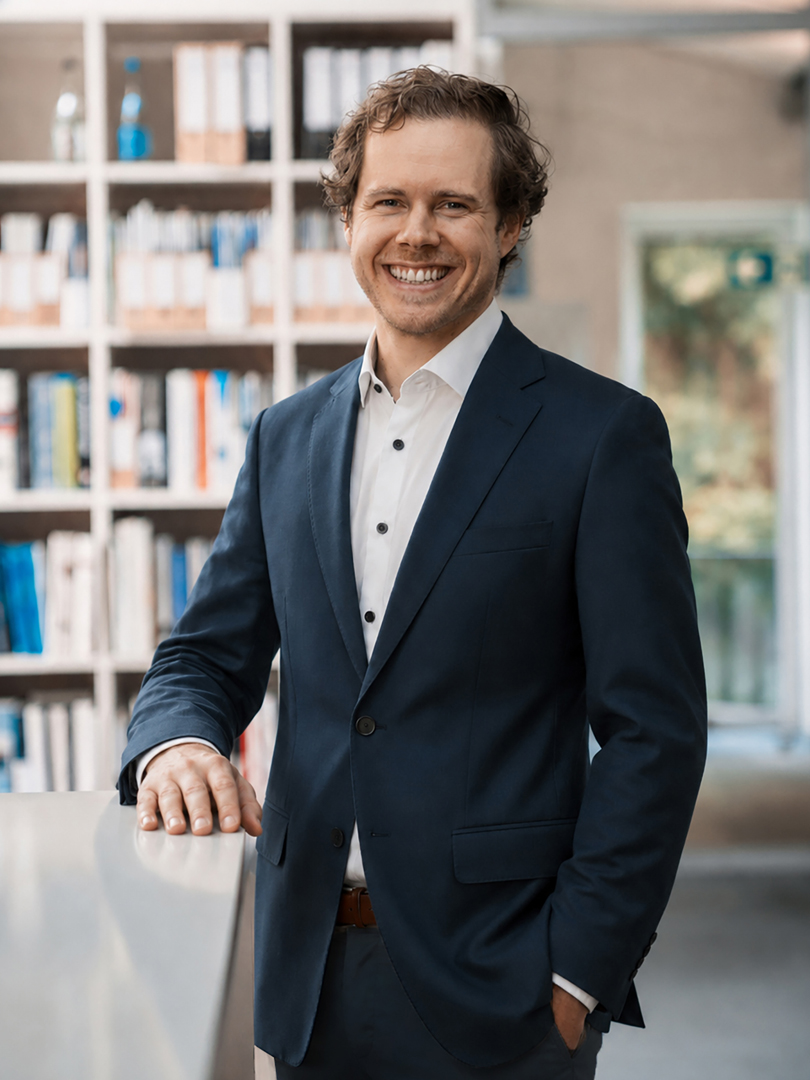

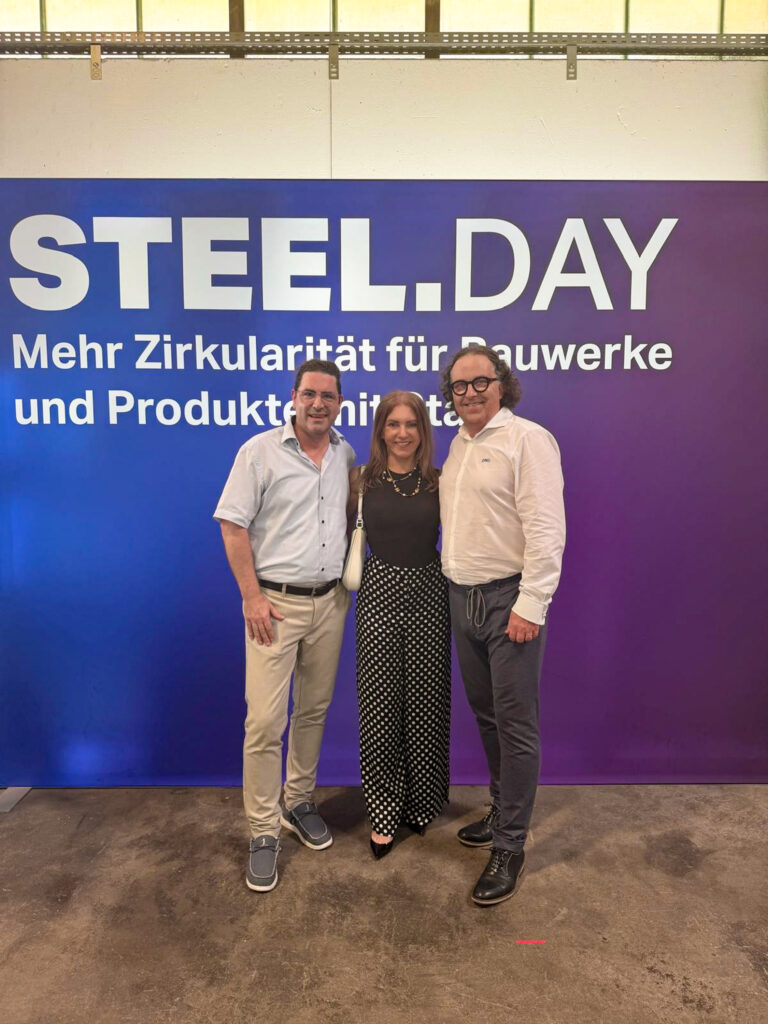
How can building materials be used for longer, construction products be dismantled at a later stage, and materials be reused effectively? These questions were the focus of attention at STEEL.DAY at ZINQ in Gelsenkirchen. Our Managing Director, Valentin Rüther, was also in attendance.
This topic is particularly relevant to Huber Parking, as our car parks are largely made of steel and concrete. This raises the important question of how these materials can be used not only durably, but also responsibly throughout a building’s entire life cycle.
The circular economy as a key challenge for the future of the construction industry.
The construction industry is undergoing a fundamental transformation due to climate change and the need for increasingly scarce resources to be managed more consciously. The traditional ‘make, use, dispose’ principle is no longer sustainable in the long term. What is needed are construction methods that ensure materials remain in the cycle after their useful life has ended.
This is precisely where circular construction comes in. The aim is to plan, use and document building products in such a way that they can be separated by type, reused or recycled later. In the context of car park construction, this relates to factors such as material selection, joining techniques, corrosion protection, maintenance and demolition.
Therefore, a multi-storey car park is not just a structure designed to meet today’s needs. It is also a store of materials for the future.
Why steel is particularly well-suited to car park construction.
Steel has played a central role at Huber Parking for many years. It is a robust and durable material that lends itself well to modular construction methods. With appropriate planning, it also offers good prospects for being dismantled, separated and returned to the material cycle.
The decisive factor here is not just whether a material is theoretically recyclable. What matters is whether it remains accessible, separable and recoverable at the end of its service life. This is why demountability, documentation and material quality must be considered from the outset of the planning process.
In the context of modern car park construction, this means that structures should be designed in such a way that they can be used, maintained and adapted for a long time, and later dismantled in a sensible manner.
Professional exchange at ZINQ.
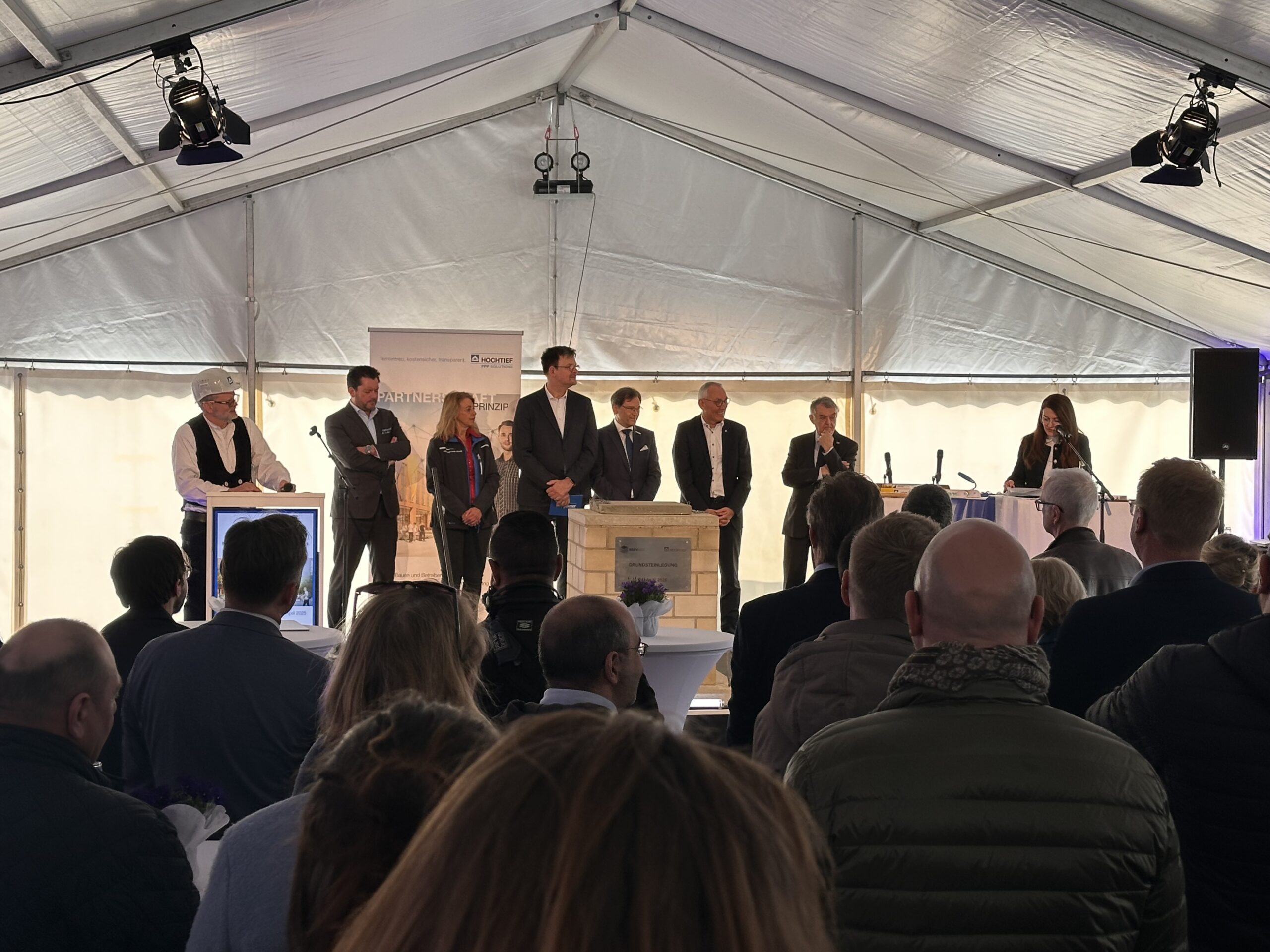
STEEL.DAY provided the ideal setting for this. Together with ArcelorMittal and Welser Profile, ZINQ brought together stakeholders from business, the metalworking trade, academia and politics together to share knowledge, combine perspectives and develop concrete approaches to the circular economy further.
The focus was on concrete approaches from the construction sector, industry and materials processing. The discussions centred on how circular construction can be implemented in practice and the role of steel, surface protection and durable building products in this process.
Huber Parking is particularly interested in exploring how circular principles can be integrated into the day-to-day planning and construction of multi-storey car parks. The discussions revealed that considering circularity throughout a building’s entire lifespan and selecting appropriate building materials are the most critical factors for achieving sustainability and competitiveness in the construction sector.
What Huber Parking is taking away for car park construction.
A visit to STEEL.DAY confirms Huber Parking’s approach to car park construction. Steel car parks provide the ideal conditions for durable, adaptable and resource-efficient construction. At the same time, the circular economy is a challenge that can only be successfully addressed through collaboration across the entire value chain. Unfortunately, policymakers have not yet uniformly regulated this process in public tenders. The responsibility for sustainable construction is being shifted onto companies.
For circularity, clear material concepts, durable structures, dismantling-friendly designs and thorough documentation are essential. It is only when all of these elements work together that theoretical recyclability becomes genuine reuse.
We would like to thank Lars Baumgürtel and ZINQ for inviting us to Gelsenkirchen, and all those involved in facilitating a professional exchange. STEEL.DAY was an inspiring event for Huber Parking, sharpening our focus on steel, the circular economy and the sustainable transformation of the industry.